

New England-based writer Jane Brox has written, elegiacally, of growing up on her family’s Massachusetts apple farm in Here and Nowhere Else, Five Thousand Days Like This One, and Clearing Land: Legacies of the American Farm.
Brilliant is “a sweeping history of our transformative relationship to light.”
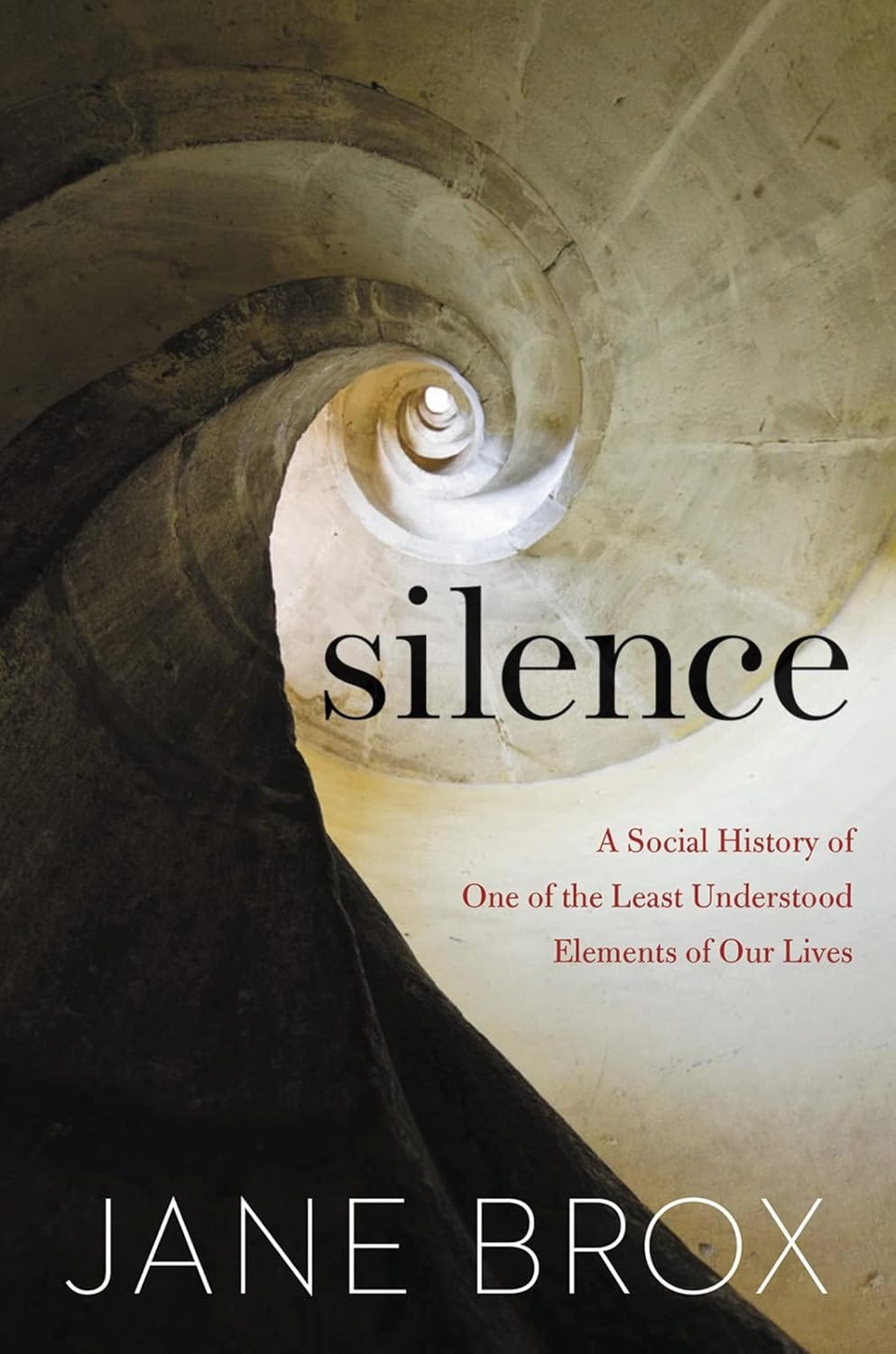
Her most recent work, published in 2019, is called Silence: A Social History of One of the Least Understood Elements of Our Lives.
Brox opens with a description of Philadelphia’s Eastern State Penitentiary, established in 1829 as an experiment in prison rehabilitation. Each cell was essentially what we would today term a SHU (Special Housing Unit), where inmates were kept in virtual 24/7 solitary confinement.
“[D]uring the period of their confinement, no one shall see or hear, or be seen or heard by any other human being,” ran a portion of the prison’s mission statement.
Inmates at Eastern State and a similar institution, Auburn State Prison in Maine, were not allowed to communicate with each other; to talk at all, ever, or to make any kind of noise, including speaking, singing, or humming, for years on end under threat of being publicly lashed, thrown into a lightless dungeon, or in one case having a metal bit thrust into his mouth with such force that the prisoner died within the hour (after which the warden was exonerated of all wrong-doing).
